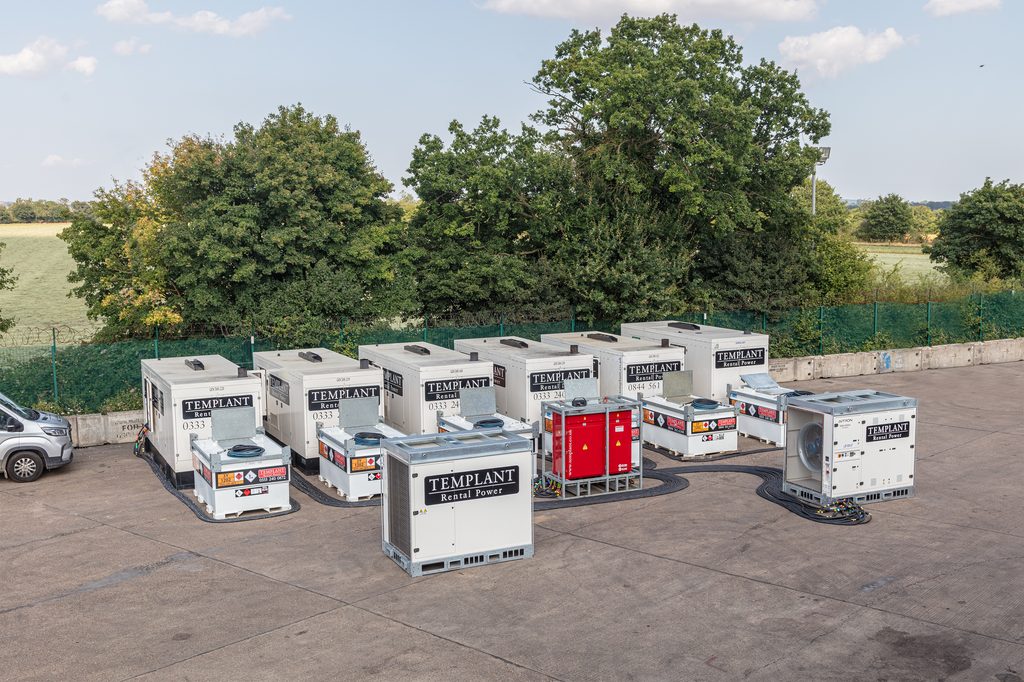
When a site’s power demand changes throughout the day, relying on a single fixed-output generator is rarely the most efficient solution. Generator load sharing allows two or more generators to work together, using Deep Sea Electronics (DSE) controllers to automatically bring units online or take them offline as demand changes. This ensures the power supply matches the site’s real-time requirements, improving fuel efficiency, reducing emissions and limiting unnecessary generator running hours.
If you’re weighing up your options for a rental power supply, here’s how it works and what it can offer your site.
How Do Load Sharing Generators Work?
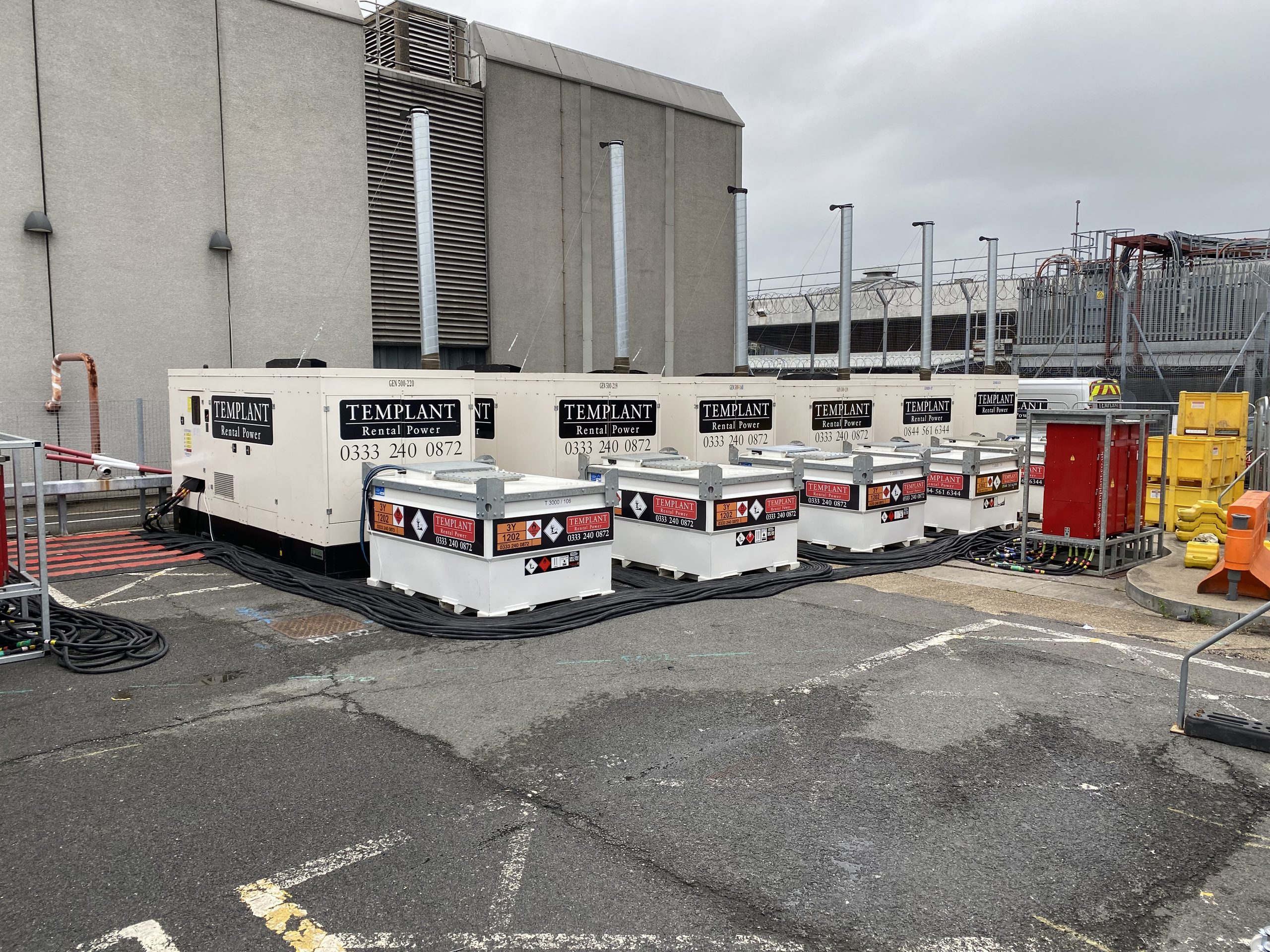
A load sharing configuration pairs two or more generators with a synchronising control panel. The panel monitors demand in real time and manages how the generators respond.
During busier periods, additional generators are brought online and synchronised with those already running, so the load is shared evenly across the set. As demand eases, overnight, at weekends, or during a quieter period of a build, the system can shut down units that are no longer required, leaving just enough capacity running to cover what is needed.
Because this happens automatically, there is no need for anyone on site to manually switch generators on and off in response to demand. It also means fuel is not being burned running capacity that isn’t being used.
Why Not Just Use One Larger Generator?
It’s a fair question, and for some sites a single unit is the right answer. But for sites where demand varies across the day or the project timeline, an oversized single generator has challenges. It’s sized for the peak, so for most of its runtime it is working below its most efficient output, which costs more in fuel than it needs to. It also leaves you with no backup, if that one generator needs maintenance or develops a fault, your site has no power until it is resolved.
Load sharing fixes both of those problems. As output is spread across multiple units that scale with demand, the generators spend more time running closer to their optimal load, and the set-up naturally builds in some redundancy.
It also gives you more room to plan around a project that is not static, since the total capacity on site can be adjusted as requirements become clearer, rather than being fixed from the outset. For a site manager weighing up rental options, that flexibility can matter as much as the headline generator specification.
How Different Loads Can Be Shared
Every site’s power requirements are different, and load sharing can be configured around a range of scenarios:
- Fluctuating daily demand: Sites where usage ramps up during working hours and drops off overnight, such as construction sites running plant and tools through the day but only needing security lighting and welfare facilities at night.
- Phased project demand: As a build progresses, power requirements often shift. Load sharing generators can be scaled up or down to match each phase, rather than needing a completely different generator specification brought in each time.
- Redundancy and resilience: Running two or more smaller generators in parallel, rather than one large unit, means that if a generator needs maintenance or develops a fault, the remaining units can pick up the load and keep the site running while it’s addressed.
The Advantages of Load Sharing to Your Site
Running generators closer to their optimal load, rather than leaving them under capacity, brings a number of advantages to your site:
- Fuel efficiency and cost savings: Bringing units online and offline as demand requires cuts fuel consumption and running costs over the course of a rental.
- Lower emission: More efficient fuel use means a smaller carbon footprint, which matters as sustainability requirements on projects tighten.
- Flexibility: You are not locked into a single fixed-capacity generator, and you’re not paying to run capacity you don’t need yet.
- Built-in redundancy: With multiple units sharing the load, your site isn’t dependent on a single generator if one needs attention.
Choosing Load Sharing Generators for Your Site
The best load sharing set-up depends on your site’s specific demand and requirements, and getting it right at the planning stage avoids paying for capacity you don’t need or leaving gaps at busy periods.
Templant Rental Power can walk you through the options for your scenario and put together a load sharing solution suited to your site. Get in touch with the Templant team to talk through what load sharing could look like for you.
Frequently Asked Questions
Load sharing is best suited to sites where power demand varies, whether across the working day, between weekdays and weekends, or as a project moves through different phases. It’s also worth considering if your site can’t afford downtime, as multiple units provide built-in redundancy. If your demand is steady and predictable, a single generator may be enough. The Templant team can help you work out which option fits your requirements.
Absolutely. All our hire agreements include scheduled maintenance and servicing to ensure the generator operates reliably. For long-term hires, we conduct regular inspections to keep everything in top condition.
In addition to generator hire, we provide a range of services to meet your power needs, including installation, remote monitoring, fuel management, and maintenance. We also offer ancillary equipment like load banks, distribution boards, and lighting towers to support your setup.